Maine Food & Lifestyle's Blog Maine Food & Lifestyle magazine Home Page Table of Contents, Current magazine issue Subscription Form Back Issues Available! Blog Home Page Maine Food & Lifestyle magazine Home Page Table of Contents, Current Issue Blog Home Page Subscribe to Maine Food & Lifestyle magazine About Maine Food & Lifestyle magazine Maine Food & Lifestyle's Bits and Bites Directory Recent Press email Blog Staff Maine Food & Lifestyle magazine Home Page Home Page, Maine Food & Lifestyle magazineHome Page of the Maine Food & Lifestyle Blog Table of Contents Subscription Form About Maine Food & Lifestyle magazine Recent Press email Maine Food & Lifestyle magazine Subscribe Now! 2008 Number 1 Table of Contents

Spring Time at the Blaine House

Greetings to all those gardeners of Maine. I'm writing this post while the outside temperature nears 75 degrees in Augusta on April 23. I'm wondering if our strange weather is an affirmation of "Global Warming" or just the cycles of nature's weather patterns. I think we've by-passed spring and sprinted into summer. The crocus have blossomed, the daffodils and jonquils are showing their best yellows, and the tulips are waiting to show off their buds. The magnolia trees are blooming with their fragrant white flowers. The mourning doves are cooing, the robins are searching for earth worms, and the chickadees are raiding the bird feeder. I just love the sounds, smells, and feeling of spring in Maine.

I started seed back in February in the green house here at the Blaine House. At this point I may be running out of room. My peas are in and up (about 1-2 inches). The radishes (planted with carrots) are poking through also. Last fall's garlic is making the scene. I've just transplanted mustard spinach and collard greens to join them. Raised beds are a must for growers in Maine. The cold frame is full of the cool-loving crops waiting to be planted in the garden. The logical question is "when is the last frost?"

The beds are weeded. The garden is ready. I'm watching the night time lows to stay above freezing.

I'll keep you updated with the Blaine House Garden Calendar. In the meantime it's time to get growing!

Karen Baldacci is the First Lady of Maine.

May 17, 2008

Two Dinners at The Dames

What does the chef eat for dinner? Here are two frequent favorites at Casa Dame.

Bread and Broth

One of our most endearing of suppers came out of necessity in our early days of juggling both of our culinary school schedules, full-time jobs, and not a lot of cash. Bread and broth is still served at least once a week.

Take two soup bowls and cut up some old bread and place in bowls. In a saucepan, sauté two cloves of minced garlic in good olive oil. When it has browned, add 1 quart chicken or veggie stock and bring to a simmer. Then add whatever is on hand: a diced tomato, red pepper, shredded leftover chicken, duck, crispy pancetta, a handful of chopped parsley or whatever herbs are on hand. Pour broth over bread, and add a little freshly grated Parmesan or crumbled goat cheese, sprinkle with sea salt, and enjoy! A satisfying Dinner for Two for under $3.00!

Beanie Weenie Casserole

I have not met a chef who does not have an affinity for charcuterie. In its simplest form, it's the marriage of the forgotten art of good meat loaf and the lowly hot dog.

Chef BryanDame has a few weaknesses: good pate, foie gras, sea urchin roe, Dolphin chocolate bars and his love of hot dogs - in any form be it hot, cold, alone, or on a bun, but his most favorite of all is Beanie Weenie. This crazy casserole that I make frequently for him and his friends is a kid-at-heart favorite. This mess of yellow cheese, baked beans, hot dogs, and egg noodles is surprisingly good and is truly comfort food.

Although I do not boost this to be my most thoughtful creation, it is quick, easy, and friendly.

In a large bowl, mix 1 package of hot dogs sliced in rounds, 1 large can of B&M baked beans, ½ pound cooked egg noodles, 2 cups shredded cheddar cheese (bright yellow or orange for effect), 3 large squirts of ketchup, and 2 squirts of mild mustard. Pack into a baking dish. Take a small bag of  BBQ potato chips, crush, and sprinkle over top to form a crust. Cover casserole with foil and bake at 350 degrees for 1 hour. Remove foil and briefly brown chips. Then serve piping hot with a nice, chilled rose or a couple of cans of Pabts' Blue Ribbon. A fulled bodied Rose is to Hot Dogs what Sauternes is to seared Foie Gras.

Enjoy !

Chef Bryan Dame & Natasha Dame of The Edge restaurant in Lincolnville.


May 16, 2008

Leek Appreciation

Everything’s happening at once now. The azalea outside the kitchen window bloomed just as the hummingbirds returned—or was it vice-versa? Asparagus is on the dinner plates every night. The little hoophouse (last year’s Mother’s Day gift) is a sea of greens. But it’s the leeks that have gained my renewed appreciation this year.

A couple of weeks ago, while visiting my daughter in Montreal, I decided to make potato-leek soup for us and, not having purchased leeks in years (since they grow in my garden), I went into sticker shock at the checkout. I thought the price was a whopping $1.49 per pound; it turned out to be a whoppinger $1.49 per leek! Canadian! And these were somewhat tired-looking, old, non-organic leeks.

Come to find out at the Camden Farmers’ Market last week that that’s not an unusual price—but the farmers’ overwintered, freshly-dug, organic leeks looked a lot cleaner, crisper and whiter than those in Montreal (known, otherwise, for its abundant fine food).

So, how fortunate that we had such a good snow cover last winter: The dozen or so leeks that I didn’t get around to digging in late fall are still in the garden, ready for some spring soup, spiked with a little sorrel, perhaps. (I’m really excited about the beautiful ‘Red Veined’ sorrel that Johnny’s sells and that I’ve just started growing)

How fortunate, too, to have a little flat of leek seedlings, started on the windowsill in February, to plant out this spring. I will have to leave some in the garden this fall to overwinter—maybe under hoops covered with double layers of row cover, a technique that Eliot Coleman suggested trying with various crops at last year’s Common Ground Country Fair.

Jean English is the editor of MOFGA's, The Maine Organic Farmer & Gardener.   

Marshmallows, Then and Now

Among those of us who enjoy working in the kitchen, the ecstasy of it all can sometimes break out in agony. I'm talking about recipes that flop.

There were the eggs that curdled in three tries at the same recipe. That recipe had such promise - it sounded so good, it worked so well until the part about curdling - that I had to keep trying, until I was finally defeated. It was something baked, that's all I remember, because I wanted to forget. Not knowing what it was, I can't be tempted to try it again.

Then there was the two-ingredient dessert, an elegant, delicious, surprisingly simple thing I learned from my mother-in-law, a gourmet cook long before everybody with a pepper grinder claimed that status. She grew artichokes. She pickled walnuts from her own tree. She entertained. Who would ever guess that her Coffee Jelly (a fancy rendering of "gelatin") consisted of one pound of plebeian marshmallows melted in two cups of strong coffee?

In my young-wifey days and later too, I made Coffee Jelly to crown many a meal of, say, Austrian Veal Goulash and Noodles, Paprikasalat, and some side dish or other; I was a devoted disciple of this mother-in-law and tried to imitate her dinner party triumphs.

But time passes, and products change. After sharing that recipe in print recently without retesting it first – I hadn't made it in ages, but how could one go wrong with two dumb ingredients? – I was horrified to hear that the wondrous dessert had morphed  into a gummy, icky-sweet creature that nobody liked. Eventually we learned from the marshmallow manufacturer that those puffy little critters are now made by an extrusion process that requires a different formula.

So we retooled too, told everybody to cut the marshmallow component to ten ounces and leave the coffee at two cups. Now they're happy. But for me, that dessert is a thing of the glorious past, when marshmallows were molded, not extruded. It's all over between us.

Karyl Bannister writes and illustrates the newsletter Cook & Tell, published ten times a year.   

May 14, 2008

Bowdoin Organic Garden – A News Update

I'm new to the posts - my name is Katherine Creswell, and I manage Bowdoin College's organic garden (affectionately called the BOG). A brief program synopsis: we have a little over an acre to grow on; three-quarters of the land is on the property of Crystal Spring Farm in Brunswick, and the other portion is on campus. All the food we grow goes directly to the dining halls. The program consists of myself, in a full-time, 7 month/year position; a student intern who works June-August; and dozens of student and community volunteers. This is my fourth season at the job, and, like previous seasons, we're busier, bigger, and more ambitious than last year.

The season is well underway at the garden, having started outside earlier than any other season. At the campus garden, where the soil warms up faster and is loose sandy loam, we have the greens mix seeded and growing (beet greens, spinach, arugula, rainbow chard, siberian kale, mizuna, mibuna, red mustard and lettuce mix), the early root crops sprouting (yaya and sugarsnax carrots, chioggia and detroit beets, easter egg radishes and hakurei turnips), and peas a-climbing. Our 2 year old blueberry bushes survived a harsh winter and are full of new growth.

The big field is surprisingly dry and friable, considering it is a heavy clay loam. We have a brand new portion of the field dug up for planting hot crops this season, allowing us to leave a portion of the other field to rest under PVO (peas-vetch-oats). We just spread and disced in 28 yards of beautiful compost. In the unheated greenhouse, we have lettuce heads, herbs, brassicas (lacinato kale, green magic and de cicco broccoli, farao and red express cabbage) and flowers emerging. In the heated greenhouse we have endless flats of tomatoes (peacevine, matt's wild, black cherry, cosmonaut volkov, striped german, crimson sprinter, rose de berne), eggplants (swallow), peppers (jimmy nardello's, early jalapeno) and curcurbits (raven, parthenon, new england pie, marketmore, carnival and delicata) covering every available bench.

New this season, we're working on ordering two bicycle trailers to transport produce and supplies between the big field and campus, a distance of 2.5 miles that we've previously borrowed trucks for. We just got our budget proposal approved, so now we're trying to narrow down our choices from 7 qualified manufacturers to one winner! We just bought our own rototiller, which will hasten things along tremendously throughout the season. We also are in the midst of planting a brand new strawberry patch (cabot, sparkle and earliglow), and just finished planting 200' of asparagus (purple passion and jersey supreme).

We hope to have our first harvest before the seniors leave for good, in 3 weeks. Personally, I'm dreading when the students leave, because the campus adopts a hollow empty feeling and student volunteers are noticeably absent in the fields. I also can't wait until my summer intern starts to ease the work load!

Katherine Creswell manages the Bowdoin College Organic Garden.

May 13, 2008

Your Favorite Spot in Maine?

Tricky topic, "favorite spot;" either you're in the confessional or you've joined the Chamber of Commerce. But if favorite means "I go there all the time," a top candidate would be the weekly farmers market in Rockland. It's on Thursdays from 9 to 1 at the public landing and that's a big part of what makes it a standout. First class produce, meat, cheese and baked goods are (fortunate us!) pretty much a given at any Midcoast farmers market, but because Rockland's is right next door to the harbor, you can look up from buying a box of fragrant local strawberries - or perhaps a restorative pastry - and there in the background is a frieze of boats and the beautiful deep blue sea.

Writer and editor Leslie Land writes about gardening and food.   

Fiddlehead and Feta Cheese Omelette Recipe

When I was growing up, Saturday nights at our house meant Mom making homemade pizzas. On Sunday mornings we would often have leftover chopped peppers, onion, meats, and cheeses in the fridge, and I would use those to create special omelettes for my little brother, Brian. He’d gobble them up and I’d feel like Julia Child.

Brian is now the chef at the Thomaston Cafe and has become the cooking inspiration of the family! Here is one of his most popular recipes for spring:

Fiddlehead & Feta Omelette
Brian Beckett, Thomaston Cafe

4 ounces. fresh fiddlehead greens
¼ cup of milk
3 eggs, beaten lightly
Butter
1 ounce feta cheese

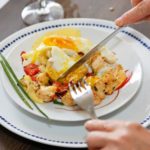
Clean fiddleheads by rinsing them. Snap off the ends of the stems. Then, blanch in seasoned boiling water. Cool immediately in ice water. Mix ¼ cup of milk with 3 eggs. Heat skillet with butter, add eggs and the fiddleheads. When almost done, add the feta cheese.

Melanie Hyatt is an editor at Maine Food & Lifestyle magazine .

May 12, 2008

Nibbles on the road

A food writer gets to eat a lot. And when faced with so many amazing options, why limit yourself to what you are officially researching? A few gustatory highlights that are not related to the piece I am working on ... but could be in the future:

  • Down a few miles off Rt. 1 in N. Waldoboro, garlicky pickle lovers rejoice. This now includes me. Morse's reubens -- piled with fresh corned beef and their signature kraut -- are worth every drippy slurp. Just be sure you have enough napkins. And that you can fight your father for a bite.
  • Giant U-10 scallops over grilled pattypans at Fuel in Lewiston. This is enhanced by a giant, crisp martini from their very sexy bar. Sit there, especially if you have a hard time eating in the dark.
  • If you like jerky, smoke and fish -- and have superhuman jaw strength -- try a bag of smoked teriyaki cod jerky from Smokin Annie's. Easy-to-access one-hand-on-the-wheel snacking.
  • Maine crab and avocado salad, fried clams and a pint of Allagash White at the Portland Lobster Co. on Commercial Street in Portland. I think we were lucky to come before the crowds. The space on their deck overlooking the pier provided a great Mother's Day backdrop, and there was enough room for the dog to get a drink too before we continued our walk on one of the many waterside trails around town.   

Jessica Strelitz is a contributing writer to Maine Food & Lifestyle magazine.

May 11, 2008

What Does the Chef Eat at Home?

I love this question because it the one I am asked the most, as the host at The Edge and the wife of Chef Bryan Dame. The simple quick answer is “whatever I feed him.” Honestly, after 12 hours in front of a stove, most chefs do not have the ambition to cook dinner.

Food is our life and is not taken lightly at Casa Dame. We talk about, read about, watch TV about, we buy from producers we know and trust, chef hunts, we grow vegetables, tour farms, pet live stock that will be dinner in a few months, and get up crazy early to go to the fish exchange. We buy oddities on the Internet, forage for wild foods, always seek out the best markets when visiting cities and there is always a fresh loaf of homemade bread on our kitchen counter.

Yes, we do enjoy and I make beautiful romantic meals like the perfect roast chicken with buttery mashed potatoes; poached halibut over braised leeks; filet crusted with gorgonzola, shallots and parsley in a red wine reduction; homemade sushi; hand rolled pasta, and, yes, all of the classic sauces do grace our dinner table, but we reserve those meals for nights off and special occasions.

In our kitchen is a battery of equipment that would make Escoffier proud. Our pantry houses seven types of vinegar, six kinds of flour, and an astounding amount of condiments, but the truffle oil is right at home in the fridge with Hidden Valley Ranch Dressing.

The rules of dinner are simple: easy preparation, made from scratch—fresh, local when available—nutritious, and the most of every dollar. I’ve been known to spend a king’s ransom on a pound of fair trade coffee but otherwise I am an incredibly savvy and thrifty shopper.

So what does that translate to on the plate? Many seasonal soups and stews, lots of fresh vegetables, pounds of salad, a cheese plate with fruit and bread, grilled foods, tofu eight ways, omelets with a variety of filling, falafel, loaded baked potatoes, tacos, banana pancakes, grilled cheese plain or dressed up, and plenty of whole grains and beans.

The most important rule to dinner is that it should be leisurely and shared.  Simple, tasty and together.

Chef Bryan Dame & Natasha Dame of The Edge restaurant in Lincolnville.

May 09, 2008

The tastes of Maine

I've logged more than 500 miles in 2 days on assignment checking out Maine eateries that have stood the test of time. While I work on this story (which should be in the magazine later this summer), here are a few rules for a Maine food road trip:

  • Pace yourself. Do not start out with a breakfast sandwich at the airport in Baltimore. You may think you are hungry, but it will likely be overwhelmingly disappointing and take up unnecessary space in your stomach. Especially when the next meal you are faced with involves the option for amazing corn muffins.
  • Take a map. Even if you lived in Maine for 18 years and your family has lived in the state your entire life -- living in another state for eight years where driving 5 miles takes 45 minutes twists your sense of time-distance to an unrecognizable state.
  • Bring your own soundtrack, because where you're going, the radio becomes very limited. Mine so far has been: Miles Davis, Dave Matthews, Stevie Wonder, Indigo Girls, Springsteen & Wilco.
  • Watch your fuel. If gas is offered to you by the car rental agency at $3.55 per gallon -- buy as much as you can -- especially when "on the street" you will not see it below $3.68 per gallon for 2 days. Also, ask if you can buy extra to sell on the side of the road when you are running low on funds due to overconsumption of blueberry pie. Note: This is not recommended, as it is: 1) dangerous, and 2) who wants to drive around in a car that smells like gas?
  • Pay attention. Don't check your BlackBerry while driving down a road with moose warning signs. This is guaranteed to bring moose out of the woods.
  • Get out of the car and move around. Walking 100 yards down Route 1 looking for a diner does not constitute exercise when you are eating 4 (large) meals a day. 
  • Remember, it's May in Maine. It may be 80 degrees today, but tomorrow it will be 40 and raining. Eat outside if you can an enjoy it while it lasts.
  • If it looks good, try it. The next place may not have Hermits (nutmeg! cinnamon! raisins!). What is wrong with me!?)
  • Talk with everyone. From owners to bussers, everyone has a story and it's always much more interesting than yours.
  • Eat at the counter. Ask what other people are eating. Eat that. And bring some home for family.

Jessica Strelitz is a contributing writer to Maine Food & Lifestyle magazine.

May 08, 2008

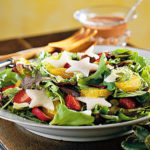
Spring Dandelion Salad

Last night, we headed to Suzuki’s Sushi Bar in Rockland to satisfy a sushi jones that we could no longer ignore. As always, the sushi was excellent, but we didn’t expect to be blown away by a special item on the menu: a spring dandelion salad.

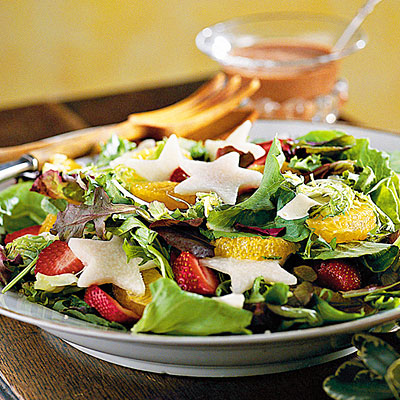
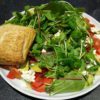
Created by Yuki, who is known for her extraordinary desserts and her inventive use of seasonal ingredients, the salad was delightful. The dandelion greens were about as local as you can get: Joe Steinberger, who owns the restaurant with his wife Keiko, picked them himself. That’s when Yuki took over. She garnished the greens with very thinly shaved Vidalia onions and fresh tuna tartar, then dressed the salad with a vinaigrette of oil and rice wine vinegar blended with yuzu, a Japanese citrus fruit, shiso, a Japanese herb, pickled plums sweetened with some sugar, and finely ground white sesame seeds.

Followed by sushi rolls made with fresh crab and raw salmon, and a small bottle of Hyorei Junmai Genshu sake, the meal was a highlight.

Merrill Williams is the publisher of Maine Food & Lifestyle magazine.

May 06, 2008

What Happened to Home Cheesemaking?

Img_2859_2

I have no childhood memories of eating homemade bread. It’s not that my Mother dislikes cooking, as she often shares with me a new recipe she is trying, I think she just had her hands full raising four children while working as a Registered Nurse. No memories of my Grandmother making bread either, however, her fresh pan-fried Rainbow Trout— she and my Grandfather caught in a local stream— I remember well, along with raspberries from her garden and fresh spring rhubarb, with which she always supplied a small dipping bowl full of granulated sugar. Yum! What an amazing concept for a young boy; dip that sour stem into enough sugar—and I mean load it up—and it actually tastes good. So the question becomes; when did bread making fall out of favor, or was I merely brought up in a family with limited culinary interest?

I bring up bread since it is far more likely that the average person will have an experience with bread making in the family kitchen than a memory of cheese making at home. Unfortunately, both of these processes of fermentation have all but disappeared from the home kitchen of the 21st century.

Continue reading "What Happened to Home Cheesemaking?" »

May 03, 2008

A Mainer's Guide to Happiness, Part II

More thoughts to ponder as you consider what matters to you, how you might have lost sight of it all, and how you may attempt to get it back. Let your mind retrace the steps of sustaining memories of your past. Build a sandcastle again. Take a walk in the rain with an umbrella, splashing in all the puddles. Smile and let the world wonder what you've been up to. Whatever you do, just don't lose sight of what matters.

  1. Garden. I remember as a little girl wading through rows of vines, stalks, and climbing trellises in our back yard. My dad was an avid gardener. I remember one year he read a book on square-foot-gardening, which was all the rage at some point in the 80’s, and we had rows of neat little nailed together square foot boxes plotted out in our back yard. It was a pleasure growing our own pumpkins to carve for Halloween, eating fresh peas in the pod right off the vine, and enjoying our own grown salads fresh at the dinner table. Nothing tastes better than home grown. If you can, grow it. Yourself.
  2. Spend more time with family and friends. Let’s face it, none of us is going to be around forever. Let the people you love know it. Don’t wait. Spend time with them doing things you both enjoy. The memories will be long cherished. Live now.
  3. Haunt and revisit the places that inspire, sustain, and heal. One of my favorite places is the ocean. I love it there for the salty breeze, the feel of the gritty sand beneath my feet and between my toes on a hot afternoon, and the opportunity it provides to satisfy my collector’s heart. I go there for the shells and sea glass. I go there for the natural relaxation it provides, and I go there for the chance to get away from the hectic, overdone days of my life. And I am never disappointed or feel I’ve wasted my time for having gone there. Enjoy nature again.
  4. Draw and paint. These are gifts I have been wasting by putting other “priorities” first. I guess re-prioritize my life would be a good addition to this list, too. I used to love losing myself at my art desk loaded with charcoals, pastels, watercolors, oils, different types of paper and canvases and brushes and...wow, I miss it. I spent teenage summers capturing flowers and fruit, seascapes, landscapes. I won awards at local fairs for my artwork. What happened? Who knows? Just get it back.
  5. Just Breathe. Now I know this sounds like an odd statement to make, but there is a lot of stress in this world. I’ve done yoga, and one of the greatest benefits it teaches is how to live in the moment. We’re all too worried about tomorrow, what might happen, or the past and what has already happened. Take 10, deep-cleansing breaths twice daily. Sit in a quiet place when you do this, and close your eyes. Forget about having to do something, having to be somewhere, just sit there and focus on the breath. The world doesn’t teach us that it’s ok to be alone with ourselves, quietly.

How did I allow life to become so non-inclusive of all the things I love? I guess things that are big get lost in the background of our lives sometimes, replaced by the mundane, smaller necessities of living. In an effort to bring those sustaining backdrops back to life, take a few minutes to remember what you love, and why.

Melanie Hyatt is an editor at Maine Food & Lifestyle magazine .

May 01, 2008

Message from Clambake Nation

Gary Nabhan and Renewing America's Food Traditions (RAFT) cropped up in the New York TImes Dining section this Wednesday. RAFT is a consortium of several foodie organizations, around the country, most notably Slow Food, dedicated to preserving heirloom edibles, (fruits, veggies, critters). Slow already has created a mechanism for identifying endangered anythings anywhere and additions to its Ark come from around the globe.

I had the distinct pleasure last summer of traveling to Vermont with Russell Libby, head of Maine Organic Farmer's and Gardeners Association, to meet with Gary and others from Northern New England and New York State. We were there to help list significant foodstuffs in our region for Gary and RAFT to incorporate into a yet another of his several profiles of American regions. RAFT has drawn a perhaps somewhat tongue-in-cheek map of North America divided into Food Nations. Russell and I represented Clambake Nation, as did a few others, essentially the New England Coast, and others came from Maple Syrup Nation which extends inland wherever there are hardwood forests from Canada to Pennsylvania.

Now we can quibble whether we live in Clambake or in Lobster, of which I'd personally prefer the latter which does not yet exist, and I think there ought to be a Baked Bean Nation carved out of Maple Syrup, but these are minor points. The really interesting thing about the RAFT map (just google it) is that by basing food traditions on iconic regional foods or dishes, it comes a lot closer to showing what is distinctive about a regions foodways, because otherwise you have people from all over the place claiming that their particular food is cornbread, or apples, or  pot roast or whatever.

Nabhan and RAFT tie a region's food habits to climate, vegetation, and culture. They come a lot closer to discovering the real outlines of our food boundaries. Then he lists some of the particular foods endangered, particular kinds of apples, or turnips (as in the Waldoboro Green Necked Turnip), or fish, berry, etc.,  because so doing encourages its production. If you live in Waldoboro (or Nobleboro,  Wiscassett, or Union) and your farmer's market starts sporting a Green Neck turnip you might just decide it is the right thing for dinner. The more you buy the more the farmer grows, and a good old turnip is saved for the future.

Sandy Oliver, Food Historian, Author, MF&L columnist: The Way Things Were

April 30, 2008

A Mainer's Guide to Happiness, Part I

Ah, Spring. Our thoughts should turn warm as our hearts are forecasting the rebirth of all things spring. Every year, I tend to use the equinox as a reminder of the conscious changes I can make to encourage my own mental and physical renewals. Bound your soul forward by listening to its whispers this year. Do some soul searching. Take notes. Then ask yourself a couple of very important questions: Just what am I passionate about? Now how do I make it happen?

I have generated a very partial list of what I need to rediscover, or at least revive. These are in no particular order because they are all important to me and have recently been so neglected.

  1. Walk more. Walk everywhere I can. Use stairs instead of the elevator. Look for a parking space far away from the store I’ll be going into. Exercise.
  2. Write. Everyday. Period. No excuses. Keep journaling, writing poetry, short stories, articles. This is essential to who I am. Write, all right.
  3. Read more. Every writer needs to stimulate her/his brain with good reading. Check out the new, revisit the classics. Whatever, keep reading.
  4. Buy less. Spend less. I am a shopaholic. I am a natural born shopper gone over the edge. I love shoes, and purses, and books, and jewelry, and...you get the idea. If you saw my apartment, you’d really get the idea. Stop with too much retail therapy already!
  5. Clean out my closets, both physically and mentally. Do away with anything I’m not using or haven’t used recently. That includes bad old habits, grudges, disappointments, things from the past I cannot change. When I’m finished, I’ll dump my refuse in the proper receptacle. Recycle, dump, compost, or hit the mental delete button.

Melanie Hyatt is an editor at Maine Food & Lifestyle magazine .

April 29, 2008

Lessons from the Ferry Beach Ecology School Garden

A warm spring rain falls outside my window, binding me to my computer instead of my garden. The sound of the waves crashing onto the shore, moving in from the foggy horizon of Saco Bay, summons me to tilt my head and reflect on the last couple of weeks. The sun has been shining brightly each day, bringing warmth to my winter-chilled bones and satisfying my need to dig in the soil. After a long Maine winter it is reassuring to see life beginning in the greenhouse. Peas, spinach, and early spring flowers have been planted in the garden. The garlic's green fingers have awakened and are reaching toward the sky. Spring has finally sprung!

And so has the residential season at the Ferry Beach Ecology School in Saco. We are in the middle of running our fifth week of spring programming, bringing school groups to the coast of Maine to learn about ecology and sustainability. Trained naturalists lead students on ecosystem-based lessons three times a day. They explore the beach, forest, salt marsh, tidal pools, and our small organic garden. The garden is a vital component of our curriculum because it allows us to explore the ecology of food systems with our students. In addition to the garden, we use our four-bin composting system and dining hall to uncover some of the mysteries of our food. All of these puzzle pieces make up our Food for Thought program.

One memory I would like to share occurred about two weeks ago. We had just finished a scrumptious lunch of wholesome homemade pizza with organic tomato sauce. Two students who were part of the after-meal clean-up crew were handed buckets full of orange and banana peels, apple cores, undressed salad, and brown paper napkins. They accompanied us to the compost pile where they dumped and covered the nitrogenous material with handfuls of dried leaves. I then pointed out the well-decomposed pile of sifted compost, explaining that their apple cores would be unrecognizable and added to the garden in about eight weeks. We then ventured into the greenhouse to sample some spinach that had been growing throughout the winter. Their enthusiastic taste buds reassured me that children do like spinach and they will eat fresh, healthy food if they are simply exposed to it. So, introduce your children or your students to nutritious, fresh vegetables. You may be surprised by their reaction!

Stay tuned for more lessons from the Ferry Beach Organic Garden...

Jaime Duval is Assistant Director at Ferry Beach Ecology School.

Search Plating Up

Amazon Store

google ads